
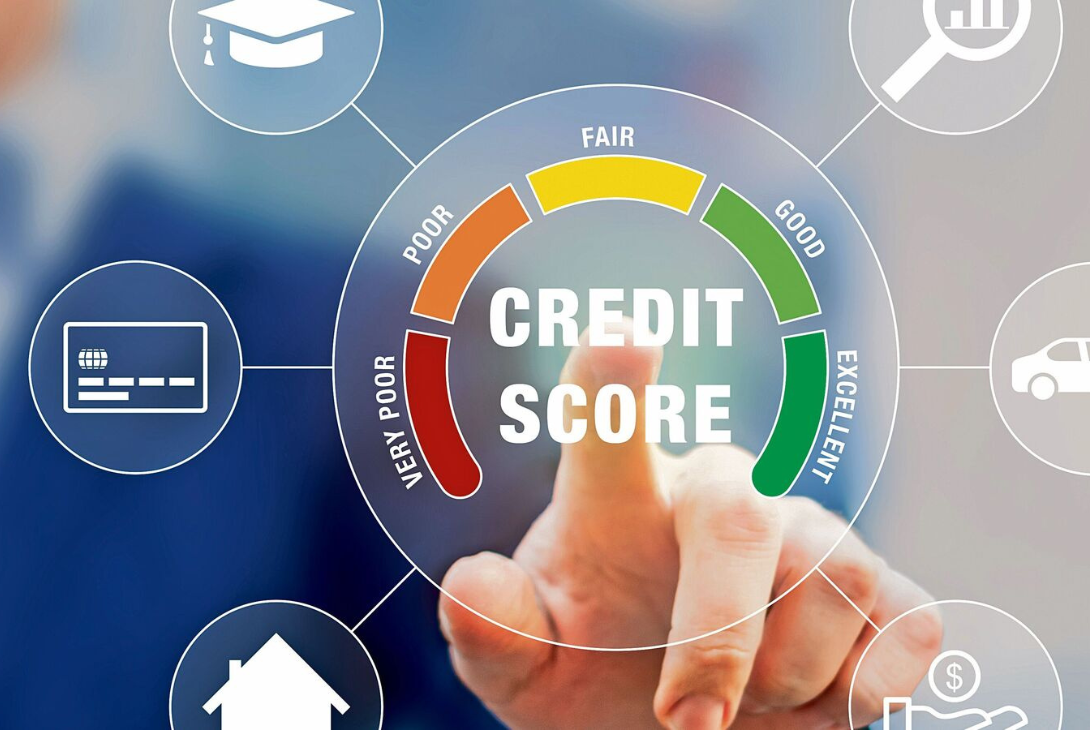
In the United States, a credit score is not just an arbitrary financial metric; it is the fundamental foundation of your economic freedom and upward mobility. For young American adults stepping into corporate life, this three-digit number dictates whether you can lease an apartment, secure a competitive auto loan, or even pass a background check for a high-security job. Navigating this ecosystem requires a highly strategic approach, especially in today’s economic climate where high interest rates make the cost of carrying consumer debt exceptionally punitive. This guide delivers a comprehensive, actionable blueprint designed to help young professionals build an elite credit profile from scratch while aggressively managing credit card debt.
Anatomy of the US Credit Score: What Actually Moves the Needle?
Understanding how your financial behavior is quantified by major credit bureaus is the first crucial step toward absolute financial mastery. In the United States, lenders rely on complex standardized algorithms to assess your risk profile, meaning every financial decision you make leaves a permanent digital footprint. By learning exactly how these scores are calculated, you can stop guessing and start making precise, high-ROI financial moves that protect your borrowing power.
Breaking Down the FICO Score Components
The FICO score, which remains the gold standard utilized by over 90% of top American lending institutions, ranges from a low of 300 to an elite maximum of 850 points. This mathematical score is calculated based on five distinct pillars of data extracted directly from your credit reports, each carrying a different mathematical weight. To optimize your score efficiently, you must focus your energy on the components that have the most massive impact on the algorithm.
- Payment History (35%): Your track record of paying bills on time, where a single 30-day delinquency can cause an immediate drop of 50 to 100 points.
- Amounts Owed / Credit Utilization (30%): The ratio of your total outstanding credit card balances relative to your total approved available credit limits.
- Length of Credit History (15%): The average age of all your open accounts, proving your long-term reliability to prospective lenders over time.
- New Credit (10%): The frequency of hard inquiries generated when you apply for multiple new credit lines within a short period.
- Credit Mix (10%): The diversity of your accounts, showing you can responsibly handle both revolving credit and installment loans.
VantageScore vs. FICO: Which One Matters More for Lenders?
While checking free personal finance apps like Credit Karma will give you an easily accessible VantageScore, it is crucial to recognize that this model operates on a fundamentally different algorithm. VantageScore is excellent for tracking daily directional trends and monitoring for identity theft, but major banks and mortgage underwriters almost exclusively pull your official FICO scores during the underwriting process. Young adults often fall into the dangerous trap of assuming their credit is perfect based on a third-party app, only to face an unexpected rejection when applying for a real-world mortgage or car lease.
Blueprint to Building Credit from Scratch
The classic financial paradox that trips up most young Americans is that you cannot obtain high-tier credit lines without already having an established history of borrowing. Breaking out of this cyclical trap requires utilizing specialized entry-level financial instruments specifically designed to safely introduce your profile to the major credit bureaus. By executing these foundational steps correctly, you can rapidly build a premium credit profile from absolute zero without falling into high-interest debt traps.
Starting with Secured Credit Cards
A secured credit card is the absolute safest entry point for any college student or young professional who currently possesses a completely blank credit file. Unlike traditional credit cards, a secured card requires you to put down a refundable cash deposit—typically between $200 and $500—which then doubles as your monthly credit limit. The bank faces zero financial risk, but because they report your monthly on-time payments to Equifax, Experian, and TransUnion, your official score begins to climb rapidly within a few months.
Becoming an Authorized User on an Account
If you have a parent or family member with a flawless, long-standing financial history, becoming an authorized user on their account is a powerful credit shortcut. By adding your name to their high-limit, low-balance credit card, their decades of perfect payment history are instantly mirrored onto your blank credit file. You do not even need to physically possess or use the plastic card itself to reap the immense score-boosting rewards of this strategy.
Credit Builder Loans and Rent Reporting Services
For young adults who prefer to avoid credit cards entirely, alternative fintech tools like Experian Boost or rent-reporting services offer a modern pathway to premium credit. These services securely link to your checking account and convert your recurring monthly bills—such as rent, utilities, and even phone subscriptions—into official, positive credit tradelines. This allows you to build a strong financial foundation simply by maintaining your regular, non-negotiable daily living expenses.
Advanced Strategies to Optimize an Existing Credit Score
Once you have established a baseline score, climbing into the “Excellent” range (740 to 850) requires mastering advanced capital optimization and strategic manipulation of the algorithm. Moving from a good score to an elite score requires understanding the subtle triggers that major banks use to assess top-tier, low-risk borrowers. These advanced methodologies ensure you always secure the absolute lowest interest rates available on the American market, saving you thousands over your lifetime.
Keeping the Credit Utilization Ratio (CUR) Below 10%
While standard financial advice often states that keeping your credit utilization under 30% is acceptable, elite borrowers know that the real algorithmic sweet spot is strictly under 10%. Your utilization ratio is calculated on both an individual card level and a total aggregate level across all available revolving credit lines. If you have a total combined limit of $10,000, ensuring your total reported balance never exceeds $1,000 at any given moment is vital for maximizing your score.
The “Toxically Smart” Method: Making Multiple Payments a Month
A common mistake young professionals make is paying their credit card bill in full on the actual statement due date, wrongly assuming this optimizes their score. In reality, banks report your balance to the credit bureaus on your Statement Closing Date, which occurs roughly three weeks before your actual payment due date. By making a manual payment right before the closing date, you artificially shrink the balance reported to bureaus, keeping your utilization near zero.
+-------------------------------------------------------------+
|              THE TWO-PAYMENT CREDIT CARD TIMELINE           |
+-------------------------------------------------------------+
| [Month Start] -------------> [Closing Date] -----> [Due Date] |
|   Spend Avrg.                  Pay 80% here         Pay 20% |
|                              (Reports low CUR)    (No Interest)|
+-------------------------------------------------------------+
Requesting Credit Limit Increases
Every six months, you should proactively log into your banking portal and request a credit limit increase, provided you have maintained clean, responsible spending habits. If your limit jumps from $5,000 to $10,000 while your average monthly spending remains flat at $500, your utilization ratio instantly cuts in half without changing your lifestyle. Always ensure the bank executes this increase as a “soft pull” so it does not leave a negative hard inquiry on your report.
Taming the Beast: Effective Credit Card Debt Management Strategies
High-interest credit card debt is the single greatest threat to the economic stability and financial future of young adults in the United States today. With average retail credit card interest rates hovering well above 20% APR, carrying a balance month-to-month can quickly snowball into an unmanageable financial crisis. If you have already accumulated a stressful balance, you must abandon chaotic, random payments and deploy a structured mathematical repayment framework immediately.
The Debt Avalanche Method vs. The Debt Snowball Method
The two most effective, battle-tested strategies for eliminating consumer debt are the Debt Avalanche and the Debt Snowball methods, each targeting a different aspect of human behavior. The Avalanche method focuses on pure mathematics, directing all extra capital toward paying off the card with the absolute highest APR first to minimize lifetime interest payments. Conversely, the Snowball method focuses on psychological wins, prioritizing the smallest balance first to clear individual accounts quickly and build emotional momentum.
| Strategy Type | Mathematical Approach | Psychological Impact | Best Suited For |
| Debt Avalanche | Pays highest interest rate first, ignoring total balance size. | Saves the maximum amount of money on compounding interest fees. | Analytical thinkers focused on pure financial optimization. |
| Debt Snowball | Pays smallest balance first, ignoring high interest rates. | Provides quick behavioral wins and immediate, positive motivation. | Individuals who need psychological momentum to stay on track. |
Utilizing 0% APR Balance Transfer Cards Safely
For young professionals with good credit scores who are trapped under high-interest debt, a 0% APR balance transfer card can act as an invaluable financial life raft. This strategy allows you to move your high-interest debt onto a new credit card that charges zero interest for an introductory promotional period of 12 to 21 months. However, you must read the fine print carefully, as failing to pay off the entire balance before the promo period expires can trigger retroactively applied interest fees.
Conclusion
Mastering the American credit system is not about avoiding credit cards out of fear; it is about learning how to use them safely as a wealth-building leverage tool. By breaking down your FICO score components, keeping your utilization under strict parameters, and attacking existing debt mathematically, you position yourself ahead of the financial curve. Treat your credit score like a vital business asset that requires continuous, strategic maintenance, and it will reward you with massive long-term financial dividends throughout your adult life.