
The American workplace is no longer defined by the physical boundaries of a corporate office, nor is it governed by the unwritten rule of the traditional “hustle culture.” Over the past few years, leading into 2026, a profound psychological and structural shift has quietly remodeled the professional landscape across the United States. Two phenomena, initially treated as temporary post-pandemic anomalies, have merged into a permanent fixture of modern corporate life: Remote Work (working from home or asynchronously) and Quiet Quitting (the practice of doing exactly what your job description requires and no more).
Decoding “Quiet Quitting” in the Modern American Workplace
To accurately analyze this cultural movement, we must first dismantle the widespread corporate and media misconceptions surrounding its actual practice. When the phrase initially went viral across social platforms like TikTok and LinkedIn, critics rushed to mislabel it as a generational wave of passive-aggressive laziness or an active strike by disaffected workers. In reality, the professional definition of this concept within corporate America is far more nuanced, structural, and legally grounded than its controversial name suggests.
What Quiet Quitting Actually Means
Quiet quitting does not mean an employee is actively slacking off, sabotaging their company, skipping mandatory meetings, or performing poorly enough to warrant immediate termination. Instead, it is the strict, literal adherence to the terms laid out in the legally binding employment contract signed upon hiring. A remote worker practicing this approach will log on precisely at 9:00 AM, execute their core daily deliverables with standard professional competence, and shut their laptop at exactly 5:00 PM. They intentionally decline uncompensated volunteer committees, avoid weekend communication, and reject the historical culture of unpaid labor.
The Cultural Shift: From “Hustle Culture” to Boundary Setting
For decades, the prevailing American cultural narrative was deeply intertwined with an aggressive iteration of “hustle culture,” where working oneself to exhaustion was romanticized as a badge of honor. However, a combination of severe macroeconomic pressures has completely shattered this corporate illusion for the contemporary workforce. Real-world wages have remained largely stagnant against skyrocketing housing costs, and massive corporate layoffs have proven to workers that institutional loyalty is rarely a two-way street. Consequently, younger generations like Gen Z and Millennials are actively prioritizing mental health over corporate titles that can be stripped away in a single fiscal quarter.
The Intersection of Remote Work and Quiet Quitting
While the underlying seeds of workforce burnout were planted long ago, it was the structural shift toward fully remote and hybrid models that acted as the ultimate catalyst for the quiet quitting movement. The physical separation of the employee from the corporate office fundamentally altered how productivity is monitored and how communication is conducted. Without the natural boundaries of a shared physical environment, the psychological dynamics of the employer-employee relationship underwent a rapid, permanent realignment that continues to challenge traditional management styles.
How WFH Blurred Professional Lines
Without a physical commute to serve as a natural psychological buffer between the office and the home, the workspace aggressively invaded personal living areas. Kitchen tables transformed into desks, and company-issued smartphones became digital leashes that kept employees tied to their work around the clock. Anxious managers, struggling to adapt to their inability to physically monitor their staff, compensated by introducing invasive surveillance software and demanding hyper-availability. Employees trapped in this exhausting cycle of answering Slack notifications at midnight eventually retaliated by establishing radical, unyielding digital boundaries.
The Statistics: Why Remote Workers Disengage
According to multi-year workplace analytics tracked by research firms like Gallup, worker engagement across the United States has experienced a steady, measurable decline over the past several years. A significant percentage of the remote American workforce now officially falls into the “not engaged” category, meaning they are digitally present but emotionally disconnected from their employer’s long-term mission. This data directly reflects a workforce that has strategically chosen to withdraw their emotional investment due to a lack of clear promotional progression, inadequate cost-of-living pay adjustments, and chronic digital fatigue.
+--------------------------------------------------------+
|       THE SPECTRUM OF AMERICAN WORKER ENGAGEMENT      |
+--------------------------------------------------------+
| [ Active Engagement ] -> High passion, drives growth   |
| [ Quiet Quitting ]    -> Fulfills contract, neutral     |
| [ Active Disengagement]-> Unhappy, disrupts culture    |
+--------------------------------------------------------+
Silver Linings: Opportunities for the US Workforce
Despite the corporate anxiety surrounding these trends, the intersection of remote work and strict boundary-setting offers unprecedented structural opportunities for the American labor force. When employees successfully reclaim control over their time, the benefits ripple outward, positively impacting their health, finances, and long-term career resilience. This shift forces a healthier redistribution of human capital that could ultimately redefine societal well-being.

Reclaiming Mental Health and Preventing Burnout
The most immediate and profound benefit of this workplace evolution is the dramatic reduction of chronic stress and occupational burnout among remote professionals. According to clinical data from the American Psychological Association (APA), unmanaged workplace stress is a direct driver of long-term health crises, including cardiovascular complications and severe anxiety disorders. By stepping off the treadmill of continuous, uncompensated overachievement, remote workers reclaim vital hours of their day for adequate sleep, proper nutrition, and physical exercise, building a natural defense system against systemic mental health erosion.
Upskilling and Side Hustles
In a fully remote environment, completing core contractual duties with high efficiency naturally unlocks unstructured blocks of time that would otherwise be wasted on office politics or performative busywork. Smart American professionals are actively utilizing these reclaimed hours to future-proof their personal economic security against future market volatility. Instead of dedicating extra energy to a single employer, they are investing in themselves through two primary independent channels:
- Upskilling: Enrolling in advanced online certifications, learning complex AI prompting tools, and mastering data analytics to increase market value.
- The Side Hustle Economy: Launching independent e-commerce storefronts, building software tools, or executing freelance consulting work to diversify revenue.
Important Note: To avoid immediate legal or professional termination, remote workers must ensure that their independent side hustles do not violate corporate Non-Compete Agreements, do not utilize company-owned hardware, and are executed strictly outside of core working hours.
The Hidden Costs: Challenges and Career Risks
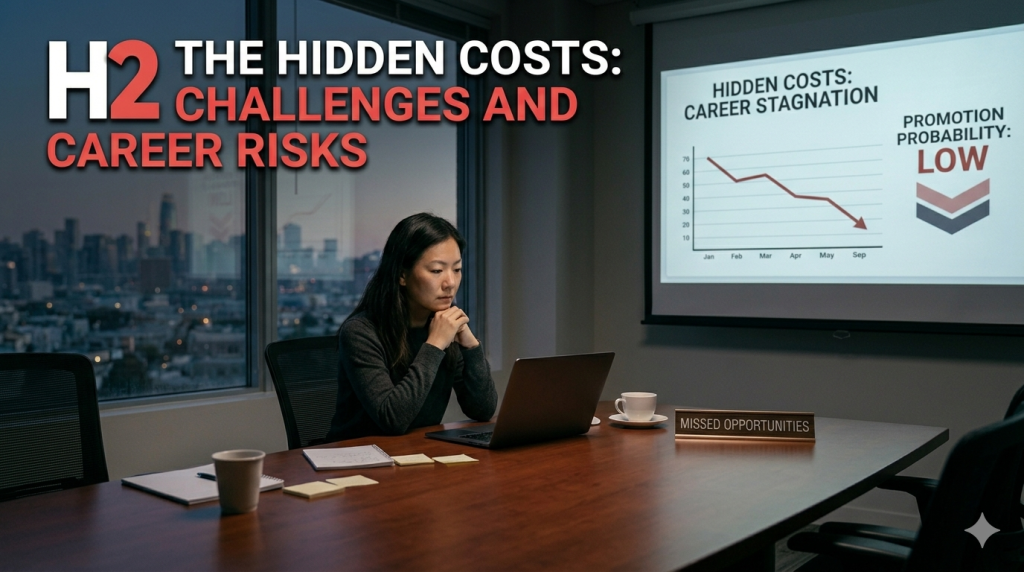
While protecting personal time is undeniably beneficial for mental well-being, the combination of a fully remote setup and a quiet quitting posture carries severe structural risks for long-term career trajectory. In a competitive, capitalistic market like the United States, invisibility within an organization often translates directly to economic vulnerability. Workers must remain acutely aware of the hidden professional penalties that come with total detachment from corporate ecosystems.
Proximity Bias and Layoff Vulnerability
Proximity Bias is the documented psychological tendency of corporate managers to unconsciously favor, trust, and reward employees who are physically present in the office over those who work behind a screen. When macroeconomic headwinds force an organization to execute rapid corporate downsizings, management looks closely at employee visibility, cross-departmental relationships, and perceived dedication. A remote worker who has intentionally minimized their communication and kept a low profile is highly vulnerable, as they are often viewed on corporate spreadsheets as an optimized, easily replaceable line item.
The Isolation Factor and Wage Stagnation
Fully remote quiet quitters face an almost total loss of organic professional networking, executive mentorship, and the informal transfer of vital institutional knowledge. In corporate America, upward mobility and high-paying promotions are frequently decided during informal interactions—such as casual hallway conversations or impromptu lunches with senior leadership. By refusing to engage beyond explicit duties, an employee caps their internal earning potential, resulting in standard, nominal merit raises that rarely beat real-world inflation and leading to long-term career stagnation.
Actionable Strategies: Achieving Strategic Equilibrium
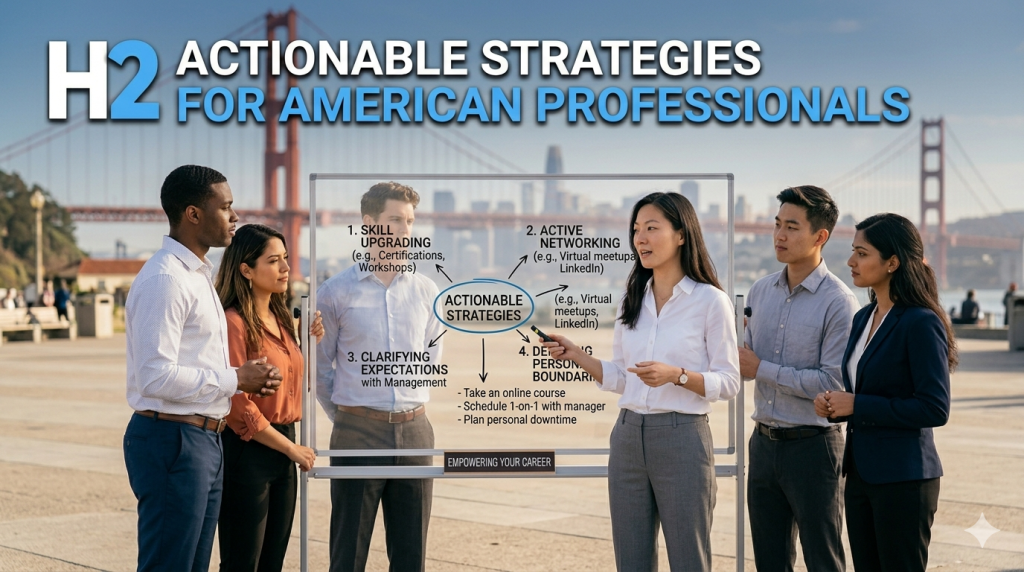
The ultimate objective for the modern American professional is not to choose between destructive burnout or complete career detachment. Instead, the goal must be the achievement of a Strategic Equilibrium—learning how to fiercely protect your personal time and mental health while simultaneously building an authoritative, indispensable career profile. This approach ensures you remain highly valued by your current employer while maintaining the energetic capacity to enjoy your life outside of labor.
Contextual Prioritization
Setting firm boundaries with your corporate manager successfully requires diplomatic, data-driven execution rather than blunt emotional refusals. When leadership attempts to assign a new project that clearly breaches your established workload or working hours, you must gracefully shift the operational responsibility back onto them. By framing your boundary around the optimization of company resources, you protect your time while maintaining a reputation as a highly organized, professional asset.
“I would be glad to take ownership of this new initiative to ensure it aligns with our quarterly goals. To guarantee it receives the focus it deserves, which of my current high-priority deliverables should I deprioritize or delay to accommodate this new workload?”
High-Visibility Efficiency
If your long-term goals include financial mobility or securing high-paying remote roles at elite firms, you must practice high-visibility efficiency strictly within your 40-hour workweek. You cannot afford to be entirely invisible; instead, you must ensure that the specific work you do perform carries undeniable business impact and is communicated clearly to leadership.
| Operational Area | The Disengaged Approach (Risky) | The High-Visibility Efficient Approach (Strategic) |
| Project Delivery | Submits work silently via email without contextual explanation or follow-up. | Accompanies deliverables with a brief, scannable summary highlighting key business metrics achieved. |
| Team Meetings | Sits with camera turned off, remaining completely silent unless directly called upon. | Arrives with camera on, contributing one highly constructive, data-backed insight early in the meeting. |
| Status Updates | Provides vague, reactive updates only when actively prompted by an anxious manager. | Sends a proactive, bulleted summary of weekly wins and clear next steps every Friday morning. |
Conclusion
The convergence of remote work and the quiet quitting philosophy is not a temporary trend, but a fundamental, permanent renegotiation of the psychological contract between American employers and employees. The era of blind corporate loyalty has faced an irreversible structural correction. By utilizing geographic freedom to eliminate costly commutes, employing strict boundaries to prevent burnout, and executing core duties with high efficiency, American workers can successfully design a modern lifestyle that prioritizes both personal well-being and long-term career stability.